Japanese knotweed is one of the most discussed invasive plants in Britain. Property owners often discover it unexpectedly while gardening, carrying out building work, or during a house survey. Once established, the plant spreads through underground rhizomes and can form dense stands that are difficult to remove without specialist treatment.
This site explains how knotweed grows, how to recognise it, and what it can mean for property owners. The guides cover identification, surveys, treatment approaches, neighbour disputes and the practical steps people usually take once the plant has been confirmed.
Why is it so talked about?
If you are concerned about a possible knotweed problem check our page on why it can be a major issue.
Where Japanese knotweed came from
Japanese knotweed was introduced to Britain during the nineteenth century as an ornamental garden plant. At the time it was valued for its tall bamboo-like stems, heart-shaped leaves and fast growth. Gardeners planted it in estates, parks and along railway lines. Over time the plant escaped cultivation and began spreading through riversides, waste ground and residential areas.
The plant spreads mainly through underground rhizomes rather than seeds. Even small fragments of root can regrow into new plants. This ability allows it to establish large colonies, particularly where soil has been disturbed by construction work, landscaping or flood movement along riverbanks.
By the late twentieth century Japanese knotweed had become widely recognised as an invasive species across Britain. Its presence can complicate property transactions, development work and land management. Because of these issues, accurate identification and careful treatment are very important.
Recognising knotweed in gardens and on land
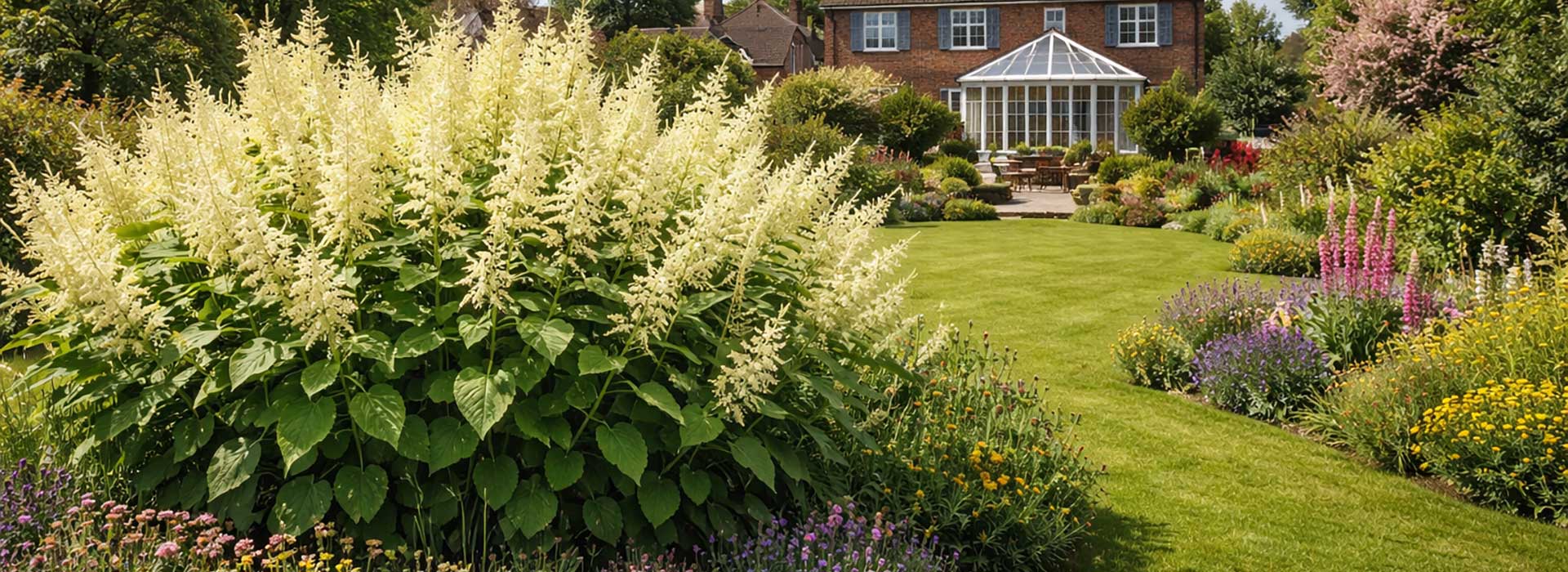
The first step for many visitors is confirming whether the plant they have seen might be Japanese knotweed. Stems often appear in spring as reddish shoots that resemble asparagus. During summer the plant forms tall green stems with distinctive zig-zag growth and shield-shaped leaves. In autumn it produces clusters of small creamy flowers, and in winter the dry canes remain standing.
Several other plants are often mistaken for knotweed, particularly bindweed, Himalayan balsam and young bamboo. The identification guides below show how to distinguish between them.
- How to identify Japanese knotweed
- Spring shoots and early growth
- How knotweed appears in winter
- Plants commonly mistaken for knotweed
- Knotweed photo identification guide
Property questions people often face
Many visitors arrive here after knotweed has been mentioned in a survey or raised during a property sale. Mortgage lenders and buyers sometimes ask for further information if the plant is found on or near a property. The guides in this section explain how knotweed can affect property transactions and what surveys or management plans may be requested.
- Knotweed and property sales
- Mortgage issues caused by knotweed
- Knotweed discovered during property surveys
- How knotweed can affect property value
- Knotweed on development land
Surveys and professional assessments
Where knotweed is suspected, a specialist inspection may be required. Surveyors assess the plant, estimate the extent of underground rhizomes and recommend management plans where necessary. Some mortgage lenders ask for formal reports confirming that treatment has been arranged.
- Knotweed surveys explained
- Cost of a knotweed survey
- Knotweed management plans
- Mortgage lender knotweed reports
- Get local specialist help
Treatment and removal approaches
Knotweed treatment usually involves either long-term herbicide programmes or excavation of affected soil. The choice depends on the location of the plant, access to the site and how extensive the root system has become. Professional management plans sometimes run for several growing seasons to ensure the plant does not return.
- Knotweed treatment options
- Herbicide treatment programmes
- Excavation and full removal
- Root barriers and containment
- Professional management plans
- Insurance backed treatment guarantees
Neighbour disputes and legal issues
Knotweed sometimes spreads across boundaries between neighbouring properties. Where this happens, questions can arise about responsibility for treatment or potential property damage. The following pages explain how disputes are commonly handled and what options may be available.